
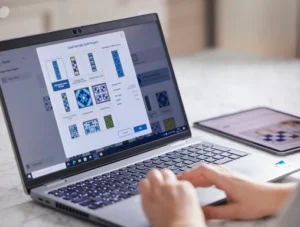

Give old denim new life with simple sewing projects, visible mending, and creative upcycling ideas.
You’ve probably been seeing this already
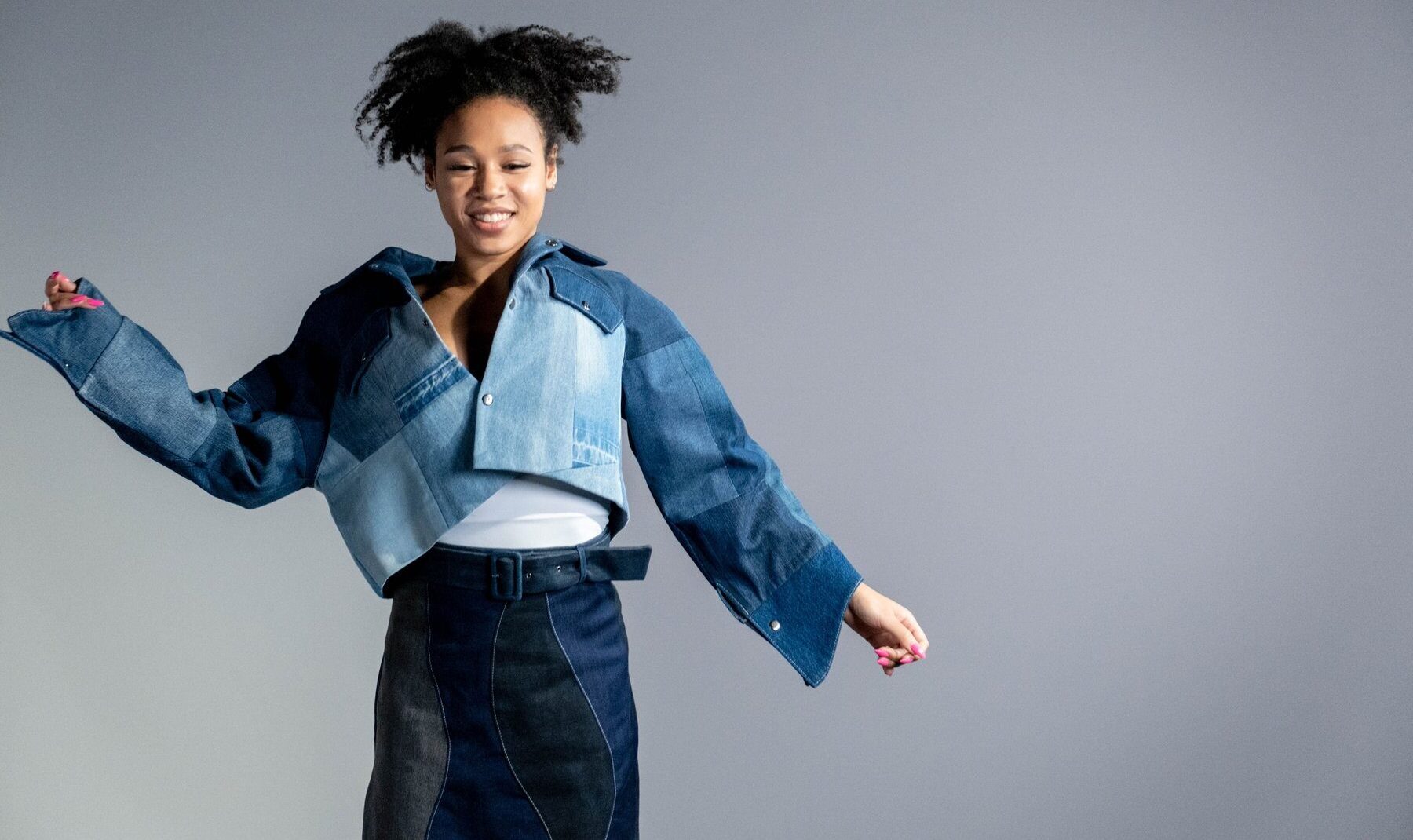
You know the look: jeans with a patched knee that looks intentional, a denim jacket with different washes pieced together, a tote made from old jeans, or a skirt that clearly started life as something else.
Reworked denim is one of those trends that makes sense for sewists because it doesn’t ask you to start from scratch. It asks you to look at something sturdy, familiar, and maybe a little worn out, and see what it could become next.
That’s a pretty good lane for anyone who likes making things.
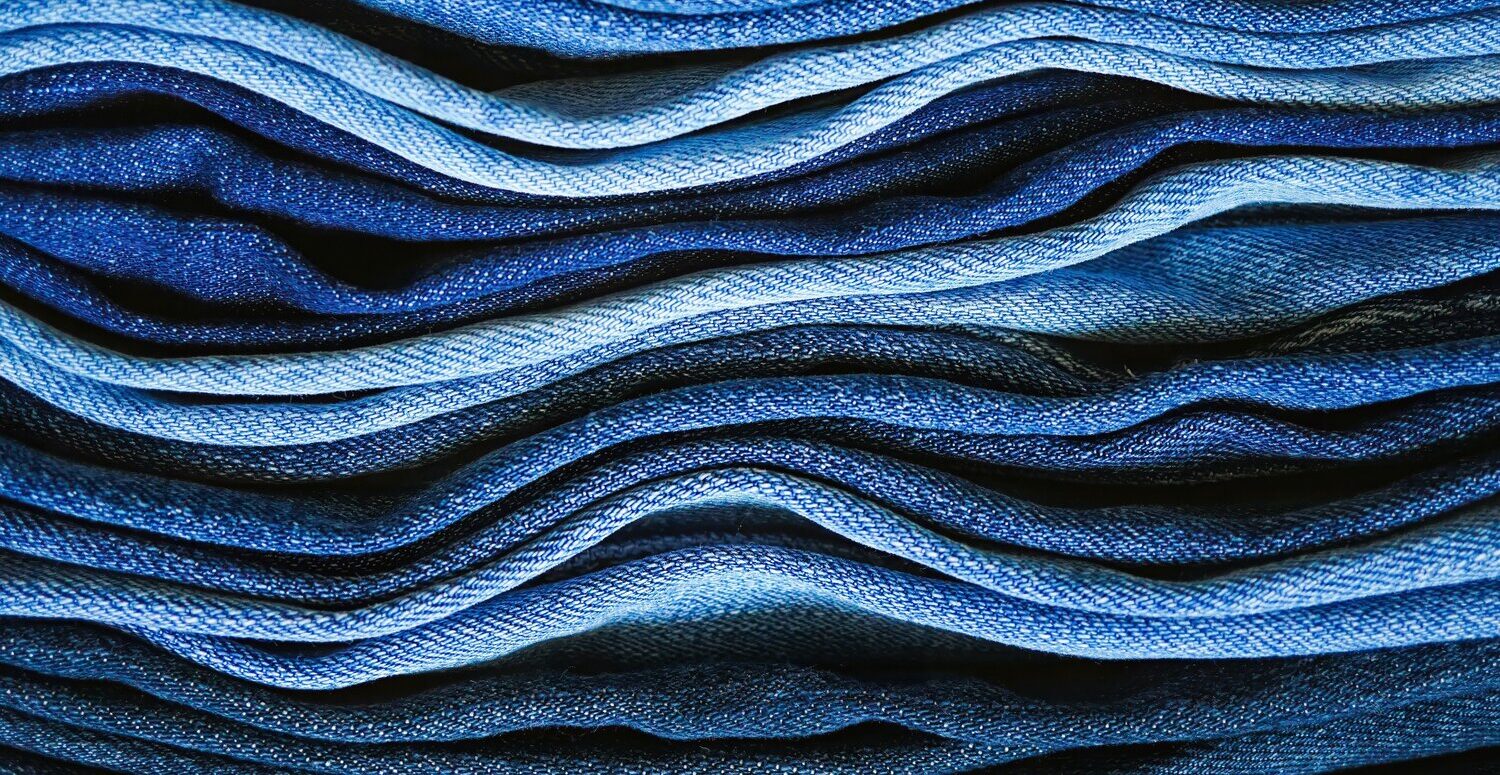
Why denim works so well for this
Denim has enough structure to hold up to patching, topstitching, appliqué, embroidery, and piecing. It can look polished or a little rough around the edges, and both can work.
Right now, denim and indigo are showing up beyond basic jeans too: in home pieces, accessories, handmade goods, and textured, lived-in styling. That’s part of the appeal. It feels useful, familiar, and still personal.
You’re not looking for perfect denim. You’re looking for potential.
Good pieces to start with might be:
- jeans with worn knees or a great wash
- a denim jacket that needs personality
- old jeans that can become a bag, apron, or pillow
- scraps from hemming or past projects
- thrifted denim that’s sturdy but not too stiff

Start simple before it gets bossy
A first project doesn’t need to be a full patchwork jacket. Sometimes one smart detail is enough.
Try adding a contrast patch behind a hole, stitching around a worn spot, replacing a pocket, or adding a strip of different denim down a side seam. Visible mending can be practical and decorative at the same time, which is why it keeps sticking around.
If you like a cleaner look, keep the thread close in color. If you want the repair to show, use contrast stitching, decorative stitches, or a little embroidery.
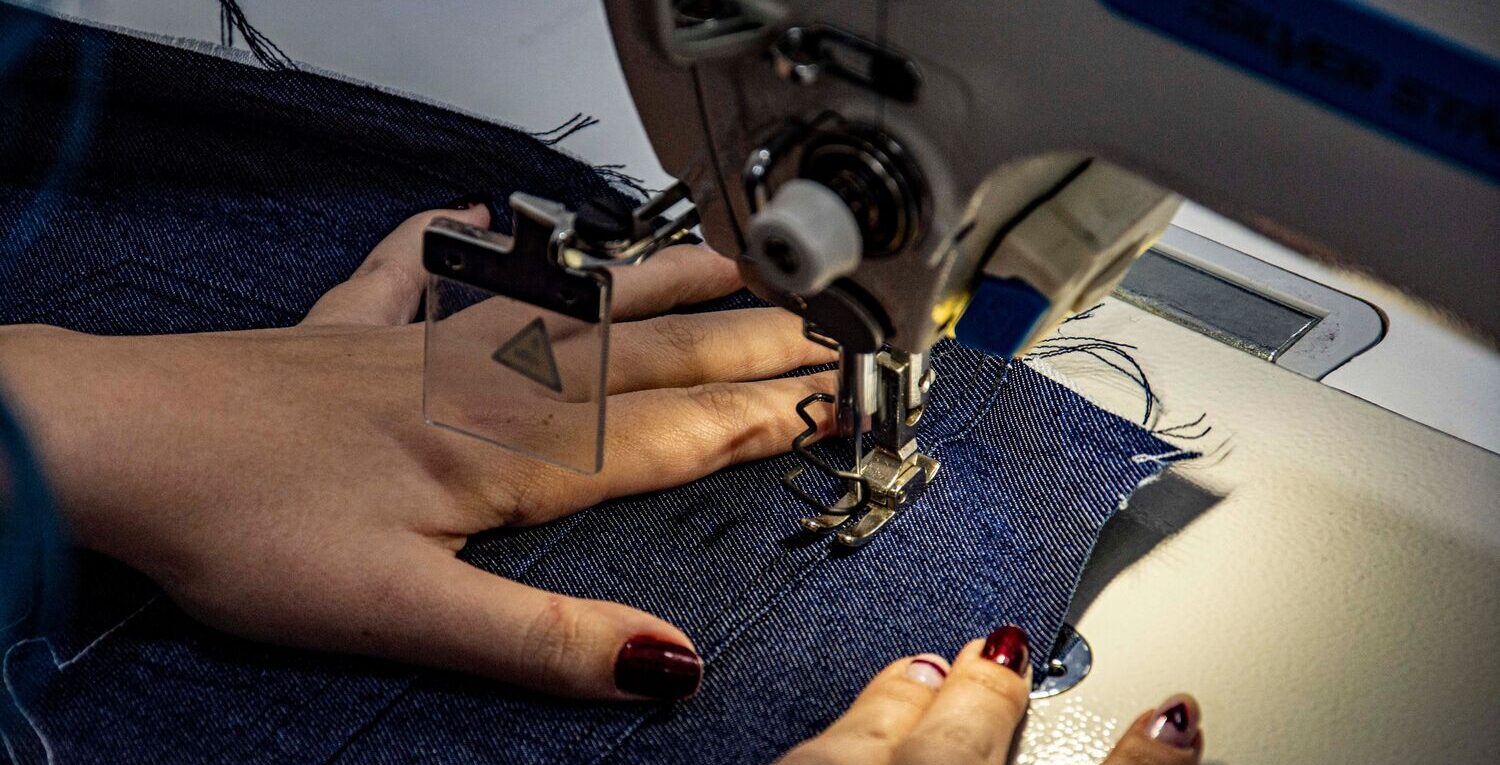
What helps at the machine
Denim can be friendly, but it can also get bossy when the layers stack up.
A jeans needle is usually the first place to start. For cleaner visible stitching, a topstitch needle may help too. A walking foot or dual feed can make a difference when layers want to shift, especially on patchwork or heavier seams.
For decorative patching, good stitch control matters. Embroidery features can be fun if you want detailed patches or embellishment, but they’re not required for every project. Sometimes the right needle, foot, and slower sewing are plenty.
Bring the idea in
That’s where McKinney Sew & Vac can help. Bring in the jeans, the jacket, the patch idea, or even a “what do I do with this?” piece.
We can help you talk through whether your current machine is enough, what needle makes sense, what foot might make the project easier, and whether you’re fighting the fabric for no good reason. Some projects need a different setup. Some just need a little patience and the right tool.
Either way, reworked denim is a good reminder that the best sewing projects don’t always begin with new fabric. Sometimes they begin with something that’s already lived a little.
Recent Posts
Oct. 01, 2026
The Return of Texture
Sep. 01, 2026
Why Craft Nights, Classes, and Creative Communities Matter More Than Ever
Aug. 03, 2026
Reworked Denim Is Having a Very Sewable Moment
Jul. 01, 2026
Why Sewing Feels Cool Again
Jun. 08, 2026